
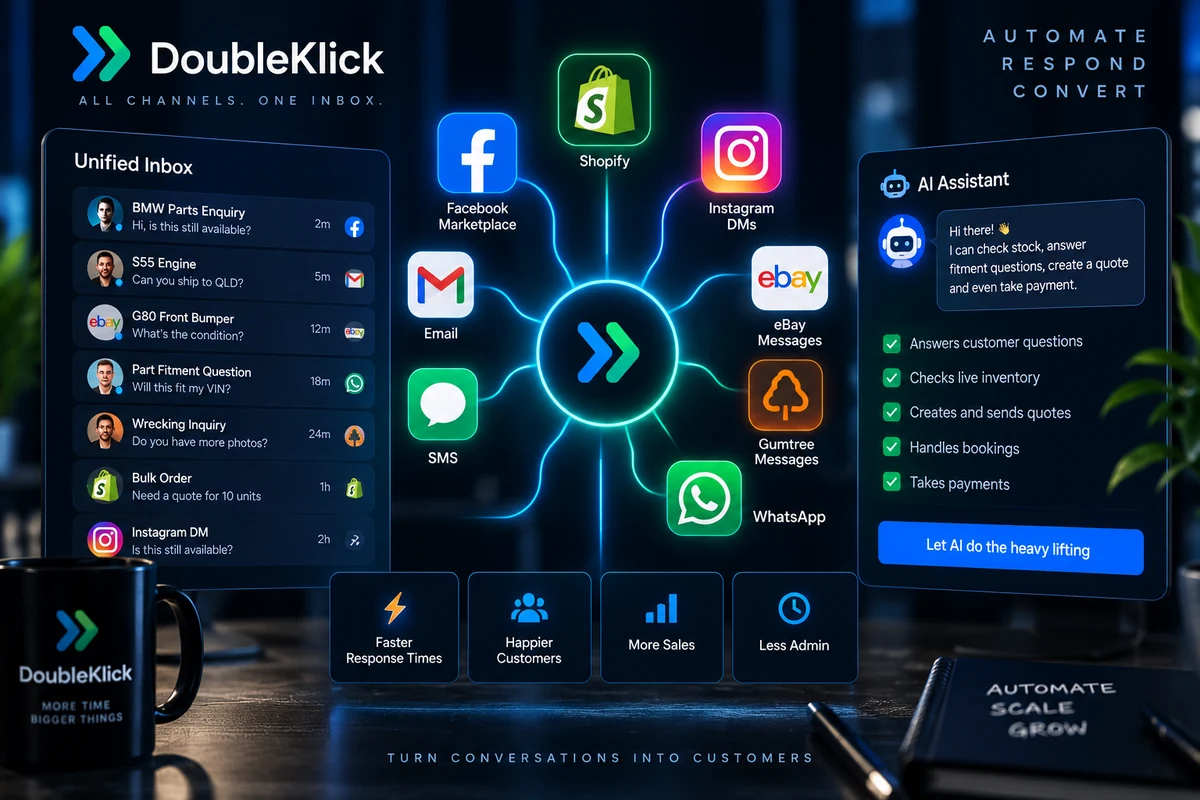
First reply to an enquiry
Enquiries from your website, shared inbox and messaging arrive in one place, get read against what you actually do, and are routed to the right person with the details needed to answer.
AI Practice
DoubleKlick is a product engineering studio. We build AI into the parts of a business where work is repeated, delayed or dropped: the first reply to an enquiry, a quote, the job paperwork behind it, and the reporting that nobody has time to write.
Where We Start
These are the workflows we are asked about most. Each one has a clear start, a clear finish and a person who currently carries it.
Enquiries from your website, shared inbox and messaging arrive in one place, get read against what you actually do, and are routed to the right person with the details needed to answer.
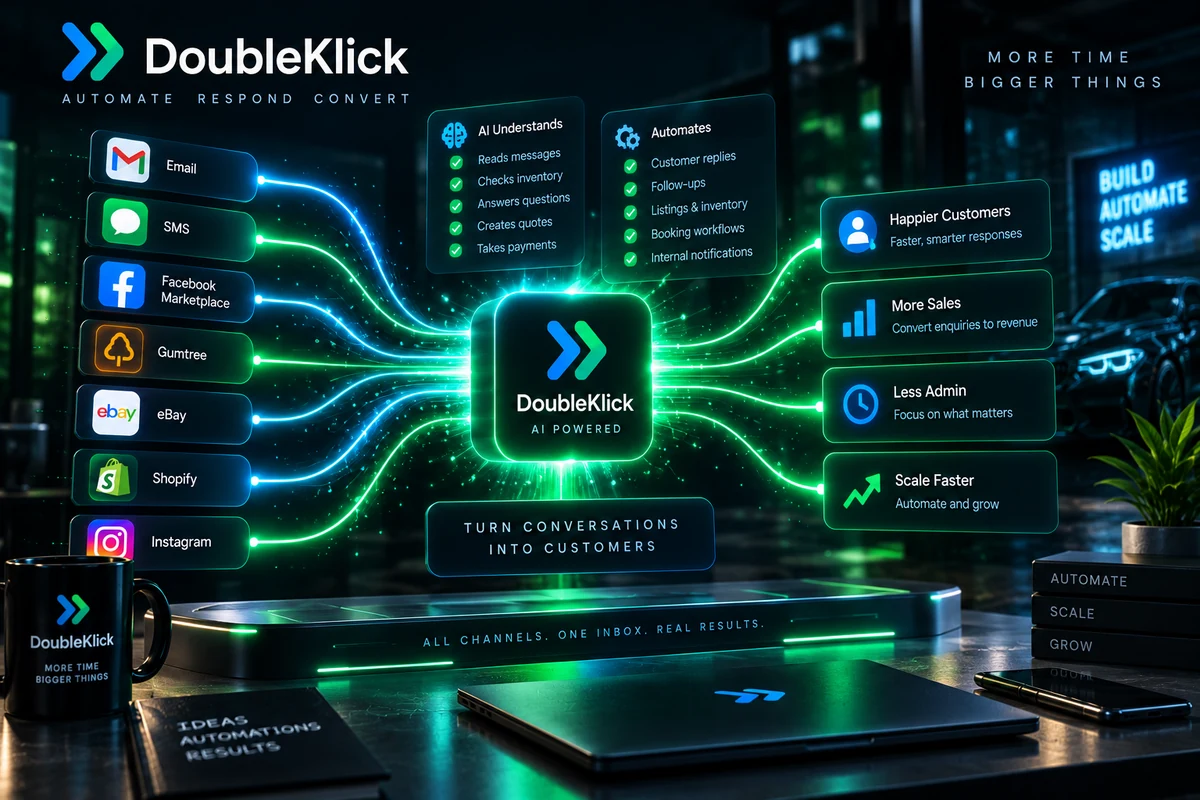
Quotes drafted from the way you already price work, job packs assembled from the details on file, and the follow up scheduled instead of remembered.
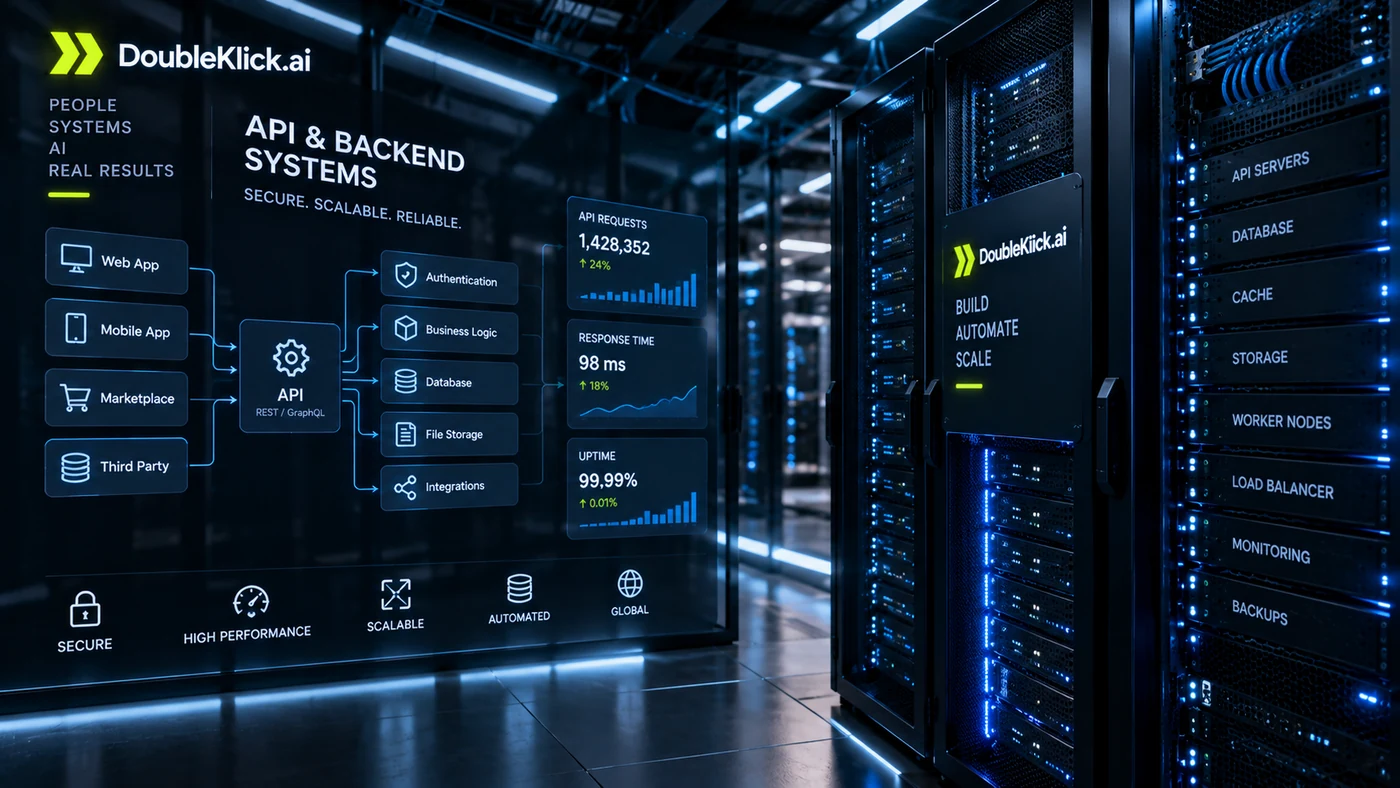
The AI reads and writes to your CRM, accounting, scheduling and stock systems, so a person is not retyping the same job across four tabs.
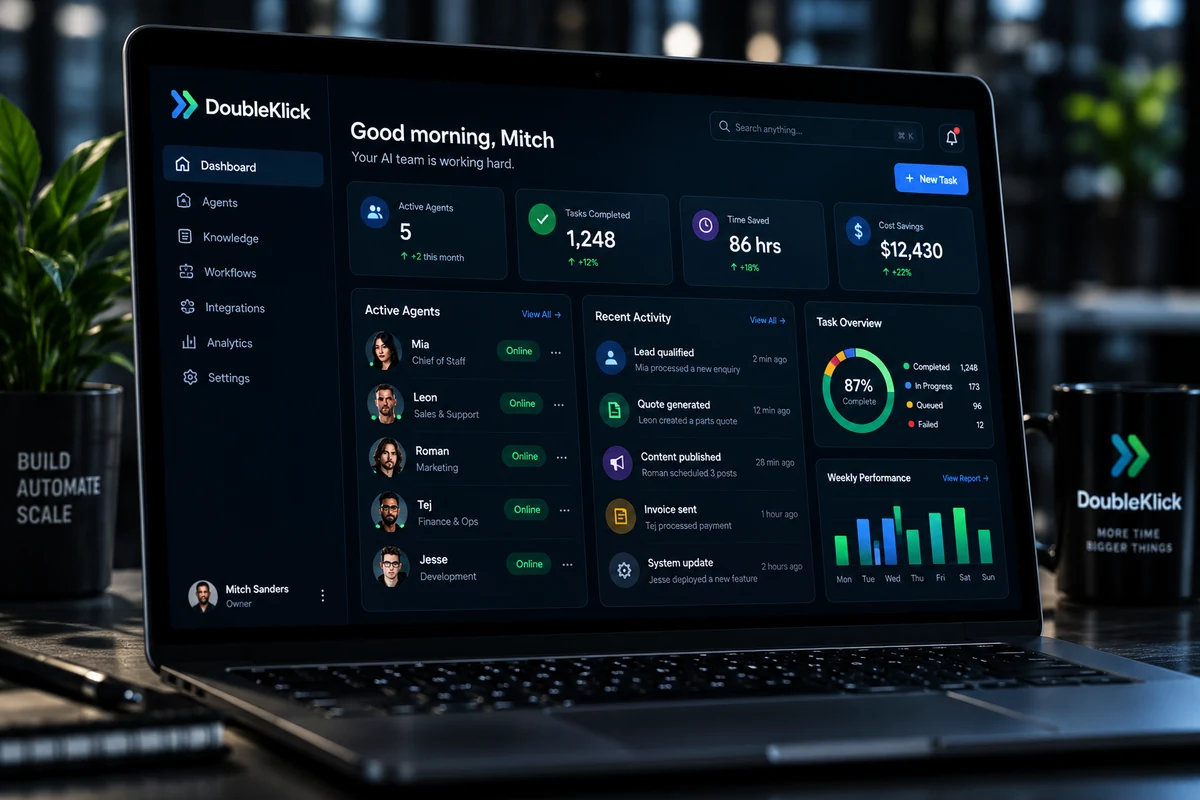
Enquiries in, quotes out, jobs booked and invoices unpaid, written as a short summary you can read with a coffee rather than a dashboard you have to interpret.
How It Runs

A wide rollout hides which part failed. We start narrow, prove the output, then extend.
We pick a single workflow with a clear start and end, and write down what a good output looks like before any model is involved.
We build against real records from your systems, including the messy ones, so the edge cases are handled rather than discovered later.
It drafts and a person approves. That stays the arrangement until you are satisfied the output is reliable enough to go further.
We watch what it gets wrong, correct it, and move to the next workflow when the first one is settled.
Two Different Offers
Custom work is scoped to your workflow, your systems and the way your team already answers customers. It is built for one business and it changes when that business changes.
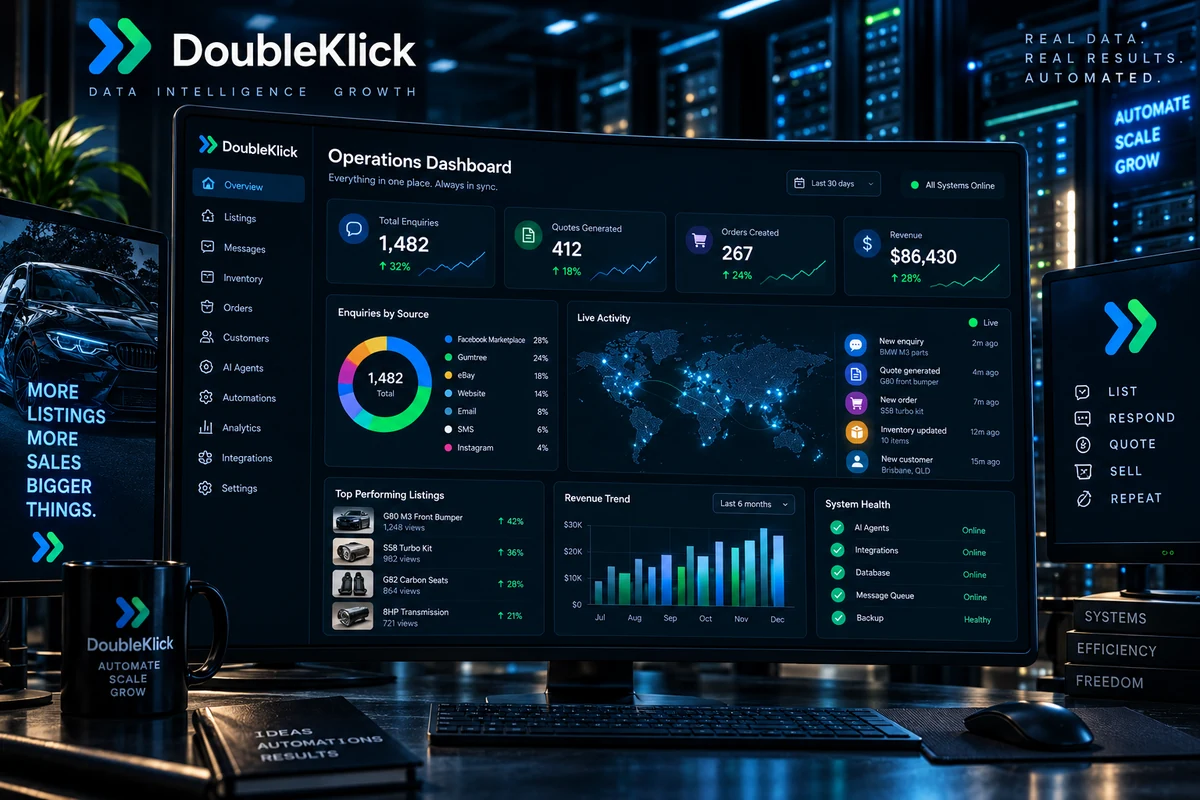
The product is the opposite arrangement: a defined AI team you can start using, with the specialists, the onboarding and the pricing published on its own site at doubleklick.ai. It is not a custom build and it is not priced like one.
If your process fits the product, use it directly. If your process is the reason the product does not fit, that is the work we do here.
Straight Answers
Not every problem is an AI problem. Where a form change, a rule or a person is the better fix, we say so instead of building a model around it.
Where a workflow touches money, contracts or customer records, a person approves the output at the start, and we are explicit about which decisions stay with your team.
The AI work sits next to the rest of the studio: product engineering, Salesforce consulting and the systems that connect them. Most AI work fails at the integration, not the model, so it helps that we build both.
Next Step
Tell us what breaks, how often, and who has to fix it. We will tell you whether AI is the right fix.